
More and more American university graduates are moving to Israel due to anti-Semitism on campuses
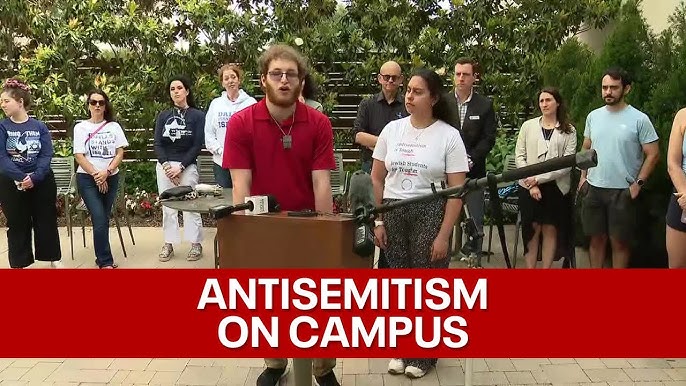
For many American college students, a recent uptick in already high campus hostility to Israel and Jews is shaping a new wave of aliyah, Hebrew for immigration to Israel, turning an embattled student identity into a commitment to build a life in the Jewish state. According to Nefesh B’Nefesh, an organization that assists Diaspora Jews in making the move, 782 North Americans aged 20–25 made aliyah in 2024, a 24% increase from 2023. The organization also reports a notable increase in university graduates enlisting in the IDF after the Hamas-led onslaught of October 7, 2023. Masa Israel Journey — a nonprofit backed by the Israeli government that places Jewish young adults in immersive study, service, and internship programs in Israel — says early registrations for its programs are up roughly 32% from this time last year. Since October 7, the organization has welcomed nearly 2,000 fellows from the United States into post-graduate programs.
This shift is unfolding against an American campus climate that many describe as increasingly hostile to Jewish students, with antisemitic incidents at their highest level ever recorded during the 2024–25 school year, according to the Anti-Defamation League.
The rise occurred as a pro-Palestinian, anti-Israel protest movement grew in response to Israel’s prosecution of the war against Hamas in Gaza following the bloody Hamas-led invasion of southern Israel on October 7, 2023, and has not abated since the United States brokered a ceasefire in Gaza last month.
Some 1,200 people in Israel were slaughtered in the October 7 massacre, and 251 were abducted to the Gaza Strip. Many academics and student groups took to the streets to celebrate the Hamas atrocities before Israel responded to the onslaught, while terrorists were still at large or in standoffs with security forces on Israeli soil. The hostile campus atmosphere has profoundly impacted the way Jewish American college students see their place within the fabric of American society.
Jessica Zmood, a psychologist and founder of Gesher Campus Care — an organization created after October 7 to provide mental health resources to Jewish college students — said that many Jewish students today report feeling “an increased sense of alienation from their campus communities and even from the broader American landscape they once viewed as safe and inclusive.” Amid this alienation, Zmood said students are increasingly deepening their networks in Jewish and Israel-focused circles to “simply be with people who get it.”
Those networks often become pathways to begin post-graduation life in Israel.
Yonatan Manor, who graduated from Boston University in 2025, said that after October 7, he became deeply involved with Israel-focused extracurricular activities. Despite majoring in film and television, Manor decided to pursue an internship at AIPAC in the summer of 2024, something he says “wasn’t in my field of study at all.”
He also stepped up to lead Boston University’s Israel advocacy efforts, which he says steeped him in a community of Zionist students from all over the country, many of whom were also contemplating moving to Israel. Three days after graduation, Manor flew to Israel to enlist in the IDF, sealing his resolve to start a new chapter in Israel. “After October 7, it was more clear than ever that there was a need for soldiers, for Israel to have a strong army, and for me to volunteer and do my part,” Manor said.
The Israel that these graduates are flocking to is still politically polarized and deeply traumatized from the horrors of October 7 and the two-year war that followed. Despite this, campus-weary students say they take solace in immigrating, viewing it as a choice to live authentically.
“For Jewish students today, safety isn’t just physical security. It’s the ability to exist authentically — to wear a Star of David, to speak about Israel or Jewish trauma, to be visibly Jewish without scanning the room first,” said Zmood.
Retreating to Jewish spaces, in her view, is an act of reclamation, and for some, making the move to Israel extends that reclamation into daily life.
Maayan Barsade, who moved to Israel after graduating from Berkeley in 2025, visited the country for volunteering trips and on a study abroad program after October 7. “I didn’t realize just how much the alienation was affecting my mental health,” said Barsade. “Having a fear of other people finding out my identity, being afraid to speak Hebrew when I was speaking on the phone with my parents, it was really hard, and it was having a drastic effect on my sense of self. Then I would come to Israel and everything would just kind of calm down, even in the midst of such chaos.”
Beyond campus climate, graduates also describe the increasingly difficult job market in the US as a part of the calculus. The US Bureau of Labor Statistics reports that the unemployment rate for new entrants is at its highest point in nine years. Further, a recent report published by the Cengage Group revealed that only 30% of college graduates managed to secure a job in their field after graduation.
Manor said that the challenging job market dovetailed with his decision to draft. “The current job market in the US being so difficult definitely does work out with my current career path,” he said. “It works out that I’ll be in the army for a few years, and afterward, if I want to, I can return, and hopefully the market will be better.”
During her time at Columbia, Poznansky felt the trauma she experienced after October 7 was invalidated by her campus community, which was uninterested in the Israeli blood spilled or in the emotional pain felt by American Jews. “Going to Israel was part of a healing process I couldn’t begin at Columbia,” she said. “I realized I could not stay in a culture where my pain and grief are celebrated.”
After graduation, Poznansky took a summer lab position at the Weizmann Institute of Science. Feeling deeply supported by mentors and peers — profound after a year spent defending her grief on campus — she canceled her return flight to the US and turned down an offer to join a prestigious lab at MIT.
During the 12-day Israel-Iran war in June, an Iranian ballistic missile destroyed Poznansky’s lab at the Weizmann Institute. “Seeing videos of the building collapsing was shocking — it was the visual representation of my security in Israel going down in flames,” she said.
Even so, the institute, her lab team, and her new community rallied around her, sharing her burden and reinforcing her decision to stay. “It became clear to me why Israel is as productive as it is,” Poznansky added. “The support networks here give you the basis to take risks — scientific and academic — because other parts of life are so well supported.”
For Chloe Katz, a 2025 Columbia graduate, moving to Israel came with a nonnegotiable: IDF service — and greater personal risk. “Even as I was entering a war zone and bringing myself closer to physical danger, I felt more at peace,” she said. “My values feel aligned with my actions when I’m in Israel.”
Simone Saidmehr