
Almost 2 million Israelis below poverty line, including 1 in 4 kids
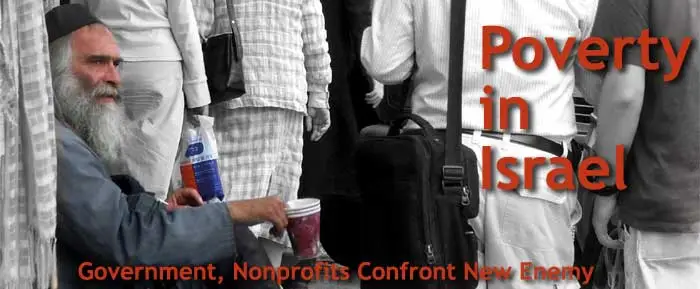
Roughly two million people, including 880,000 children and 150,000 elderly citizens, were living below the poverty line in Israel in 2024, according to an annual National Insurance report published on Friday morning. Making up 21 percent of the population, the figure marks an increase of 0.3% from 2023, the report for which was published in December 2024. The rate of children living in poverty is at 28%, slightly worse than the 27.9% recorded a year earlier.
With around one in four children living in poverty, Israel has the second-highest rate of child poverty among OECD countries, after Costa Rica. However, the rate of food insecurity suffered by children in Israel dropped from 36% in 2023 to 31.7% in 2024. In total, 28.1% of the population suffered from food insecurity, with 9.9% suffering from severe levels.
A single person who earns less than NIS 3,547 per month before taxes is considered to be living below the poverty line. The threshold for a couple to be considered as such is NIS 7,095, and for a family with three children, it rises to NIS 13,303. The report noted that having at least one breadwinner in the household is not enough to lift a family out of poverty: “Poverty among families with breadwinners has become an increasingly common phenomenon.” “This is due, among other things, to the increase in the employment rate over the years, and the definition of poverty as relative,” it said.
According to the NII, 27.8% of households cannot support themselves with their monthly income. The report found that 4.7% of the public give up a hot meal at least every two days, while 9% give up on medical treatments due to financial difficulties. Poverty levels are highest in the ultra-Orthodox and Arab sectors, with 32.8% of Haredi households and 37.6% of Arab households falling below the minimum threshold. In total, these two communities make up 65.1% of Israelis living below the poverty line.
The poorest municipality in Israel is the ultra-Orthodox West Bank settlement of Modi’in Illit, with 48.2% of residents living in poverty, followed by Jerusalem (38.6%), Beit Shemesh (36.3%), Bnei Brak (31.1%), Lod (21.8%), and Netanya (20.7%). Huge numbers of Haredi men study rather than work, and ultra-Orthodox education institutions don’t teach core curriculum subjects such as math, English and science, hobbling the ability of many graduates to get higher paying jobs.
The report added that inequality has grown, with Israel dropping three spots to seventh from the bottom in the OECD’s Gini index, which measures inequality. Israel is ranked above the United Kingdom, the United States, Mexico, Turkey, Chile, and Costa Rica.
The war in Gaza, which began with the October 7, 2023, Hamas-led massacre in southern Israel, contributed to the rising poverty levels in Israel, the report found. This could be for a variety of reasons, including long stretches of reserve duty potentially resulting in a breadwinner’s prolonged absence from work, or internal displacement for families close to the Gaza and Lebanon borders.
“When viewed from a multi-year perspective, poverty in Israel remains stable,” NII Director General Zvika Cohen said in a statement. “The war and the cost of living in recent years worsened the problem, but didn’t create it. “Without focused investment in children, young families, and social services, poverty in Israel will continue to pass from generation to generation. The report shows the importance of the national insurance system as a central social safety net,” he said.
NII Deputy Director General Nitsa Kisar said the report “emphasizes the importance of a social safety net and a response to the decline in public income, especially after the effects of the war and the cost of living.” The economic burden is unequal, and the social challenge requires investment in education, employment, and adequate wages to reduce gaps and lead to a reformed society.”